Apple’s MacBook Neo Challenges M-Series Performance Despite iPhone Chip
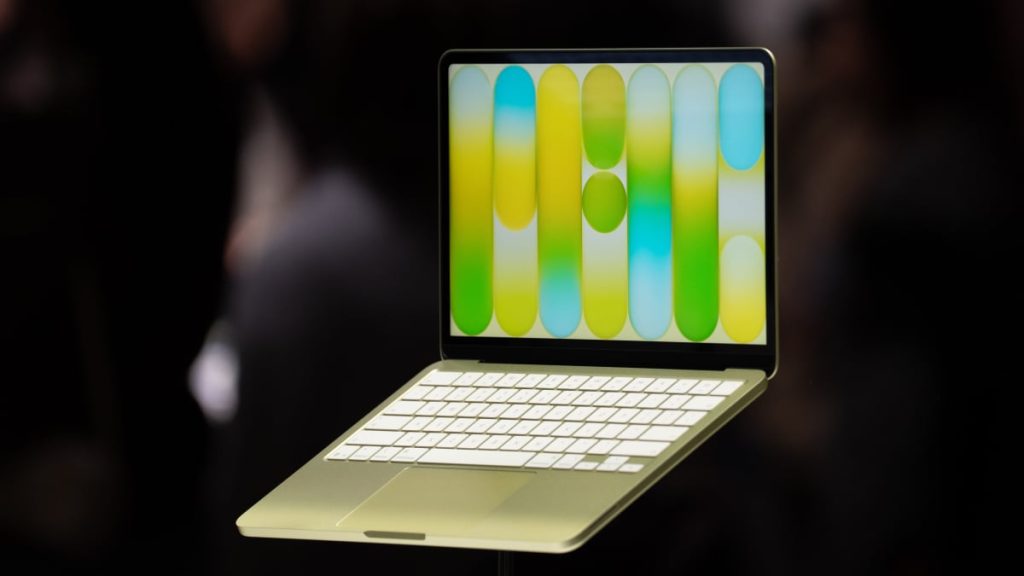
Apple’s latest MacBook Neo represents a significant shift in the company’s laptop strategy, potentially becoming one of the most compelling Apple devices in recent years. This new machine delivers the complete macOS experience across various vibrant color options at an unprecedented starting price of $599, with educational discounts bringing it down to $499. This pricing strategy dramatically undercuts the current MacBook Air, which starts at $1,099 with the M5 processor, making premium Mac features accessible at roughly half the traditional cost.
To achieve this aggressive pricing, Apple implemented several cost-saving measures throughout the Neo’s design. The device features a traditional mechanical trackpad rather than the advanced haptic feedback system found in higher-end models. The base configuration lacks Touch ID functionality, incorporates older USB-C technology including a USB 2.0 port, and omits keyboard backlighting. While these compromises may concern some users, the most significant departure lies in the processor choice: instead of Apple’s standard M-series chips used across the Mac lineup, the Neo operates on a modified A18 Pro processor typically found in the iPhone 16 Pro, paired with 8GB of system memory.
The processor implementation reveals an interesting manufacturing strategy. Apple utilizes a ‘binned’ version of the A18 Pro chip, meaning these processors didn’t meet the full specifications required for iPhone deployment. During semiconductor manufacturing, variations in quality naturally occur, leading manufacturers to categorize chips into different performance tiers. The Neo’s A18 Pro maintains the same six-core CPU architecture as its iPhone counterpart but operates with only five GPU cores compared to the iPhone’s six-core graphics processor.
Performance Benchmarks Reveal Surprising Competitiveness
Early performance testing through Geekbench reveals unexpected results for the MacBook Neo’s modified iPhone processor. The device achieved scores of 3,461 points in single-core performance, 8,668 points in multi-core testing, and 31,286 points in Metal graphics benchmarks. These results become meaningful when compared against both the source iPhone hardware and established Mac systems.
Comparison with the iPhone 16 Pro shows remarkably similar performance despite the different operating systems. The phone achieves slightly lower single-core (3,445) and multi-core (8,624) scores, while its additional GPU core provides a modest advantage in graphics testing with 32,575 points. This performance parity demonstrates the effectiveness of the shared silicon architecture across Apple’s ecosystem.
More impressive comparisons emerge when examining the Neo against established Mac hardware. The M1 MacBook Air, previously considered an excellent value proposition, scores 2,346 in single-core, 8,342 in multi-core, and 33,148 in Metal testing. The Neo’s A18 Pro significantly outperforms the M1 in single-core tasks and maintains a slight advantage in multi-core scenarios, though the M1 retains a small graphics performance edge.
Even against Apple’s current M4 MacBook Air, the Neo demonstrates competitive performance in specific areas. The M4 system scores 3,696 in single-core, 14,730 in multi-core, and 54,630 in Metal benchmarks. While the M4 clearly dominates in multi-core processing and graphics-intensive applications, the single-core performance gap remains relatively modest, suggesting comparable responsiveness for basic computing tasks.
Strategic Implications for Apple’s Market Position
These benchmark results suggest the MacBook Neo could significantly impact Apple’s market positioning, though real-world performance testing will provide the definitive assessment. The device appears positioned as a compelling alternative to Chromebooks and budget Windows systems while maintaining legitimate MacBook credentials. Consumers can choose between older Mac hardware or invest in a new Neo system with accompanying warranty and support benefits.
However, the 8GB memory configuration presents potential limitations for demanding users. While sufficient for individual applications, intensive multitasking scenarios involving numerous browser tabs or concurrent applications may strain system resources. This constraint becomes particularly relevant when comparing against older MacBook Air models with 16GB configurations, which might offer superior multitasking capabilities and better long-term viability as macOS continues evolving in complexity.