The Simple Packing Habit That Can Make Travel Days Less Stressful
Disclosure / Affiliate Notice:
As an Amazon Associate I earn from qualifying purchases. Some links in this article may be affiliate links that earn me a commission at no extra cost to you.
After watching countless travelers frantically dig through their suitcases in airport lounges and hotel lobbies, I’ve become convinced that most people are approaching packing entirely wrong. The real problem isn’t that we pack too much or choose the wrong luggage—it’s that we treat our suitcases like storage dumps rather than organized systems.
Here’s what I think most travelers get backwards: they obsess over fitting everything in while completely ignoring how they’ll actually live out of that suitcase for days or weeks. This backwards thinking creates a cascade of daily frustrations that could easily be avoided with a different approach to organization.
The Hidden Cost of Chaotic Packing
In my experience, disorganized luggage doesn’t just waste time—it fundamentally changes how you travel. When you can’t quickly locate what you need, you start making compromises. You wear the same shirt because finding a clean one requires excavating half your suitcase. You skip that early morning museum visit because hunting for your phone charger the night before left you exhausted.
What most people don’t realize is that this chaos compounds throughout a trip. Day one might be manageable, but by day five, your suitcase resembles a textile explosion. The mental energy spent on these daily searches adds up, leaving you more drained than the actual travel itself.
I’ve noticed this particularly affects business travelers and anyone on multi-city trips. When you’re living out of a suitcase rather than just surviving a weekend getaway, organization becomes the difference between feeling put-together and constantly frazzled.
Why Small Items Become Big Problems
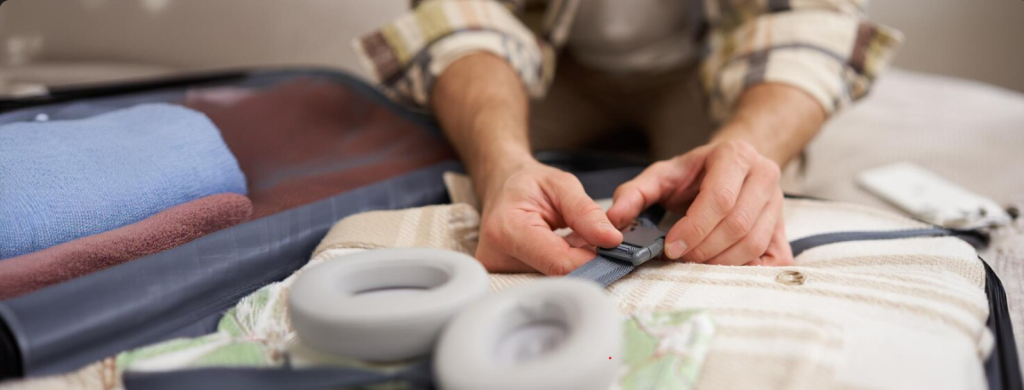
The tyranny of small objects in travel cannot be overstated. These innocent-looking items—cables, adapters, toiletries, medications—have an almost supernatural ability to vanish when you need them most. But here’s what I find interesting: it’s not really about their size. It’s about their frequency of use.
Think about it logically. Your heavy winter coat might be large, but you put it on once and wear it all day. Your phone charger, however, gets pulled out every night and stuffed back somewhere every morning. Each time you handle these frequently-used items without a designated home, you’re essentially playing a daily game of hide-and-seek with your own belongings.
This is why I believe the traditional advice about packing light misses the point. You don’t need fewer things—you need better systems for managing the things you actually use.
The Real Solution: Behavioral Design
After years of trial and error, I’ve concluded that successful packing isn’t about products or techniques—it’s about designing systems that work with human behavior, not against it. When you’re tired, rushed, or distracted (which describes most travel moments), you need organization that requires zero mental effort.
This means creating what I call “lazy-proof” organization. If finding your toothbrush requires more than ten seconds of searching, your system has failed. If you have to move three other items to reach your laptop charger, you need a redesign.
The travelers who seem effortlessly organized aren’t more disciplined—they’ve simply created systems where the right choice is also the easiest choice.
Who Really Benefits From Better Organization
Let me be direct about who should care about this: anyone traveling for more than three days, business travelers, and people visiting multiple destinations. If you’re taking a weekend trip to see friends and planning to live in the same clothes, basic organization probably won’t transform your experience.
But if you’re the type of traveler who needs to look presentable, access work materials, or simply wants to enjoy your trip without logistical stress, then treating your suitcase like a mobile closet rather than a storage container becomes essential.
Parents traveling with children especially benefit from this approach. When a toddler has a meltdown and you need to find snacks, clean clothes, or entertainment immediately, organization shifts from convenience to necessity.
The Overlooked Psychology of Travel Stress
What most people overlook is how much mental energy gets consumed by poor organization. Every time you can’t find something, your brain registers it as a small failure. These micro-stresses accumulate throughout a trip, contributing to that general feeling of being “off” or overwhelmed that many people attribute to travel fatigue.
In my observation, travelers who maintain organized luggage report feeling more in control and confident throughout their trips. This isn’t just about efficiency—it’s about maintaining a sense of competence and calm in an inherently unpredictable environment.
The psychological benefit extends beyond the trip itself. Knowing you can efficiently pack and unpack creates confidence for future travel, making you more likely to take trips and enjoy them fully.
A Different Way Forward

The solution isn’t complicated, but it does require shifting from a “stuff everything in” mindset to a “create zones” approach. This means designating specific areas for specific types of items and maintaining those boundaries throughout your trip.
This systematic approach works because it leverages habit formation. After a few trips, returning items to their designated zones becomes automatic, requiring no conscious effort or decision-making.
The key insight is that good travel organization isn’t about perfect packing—it’s about creating sustainable systems that work even when you’re tired, stressed, or running late. Because let’s face it, that describes most travel situations.
For travelers ready to upgrade their packing game, lightweight organization systems can transform the daily experience of living out of a suitcase. A practical example can be found here:
For travelers ready to upgrade their packing game, lightweight organization systems can transform the daily experience of living out of a suitcase. A practical example can be found here:
As an Amazon Associate I earn from qualifying purchases.