Beauty Brands Embrace Male Celebrity Ambassadors to Capture Female Attention
The beauty industry is witnessing a strategic shift as major cosmetics companies increasingly turn to attractive male celebrities to promote their products to female consumers. This emerging trend represents a departure from traditional beauty marketing approaches that typically featured female influencers or brand ambassadors.
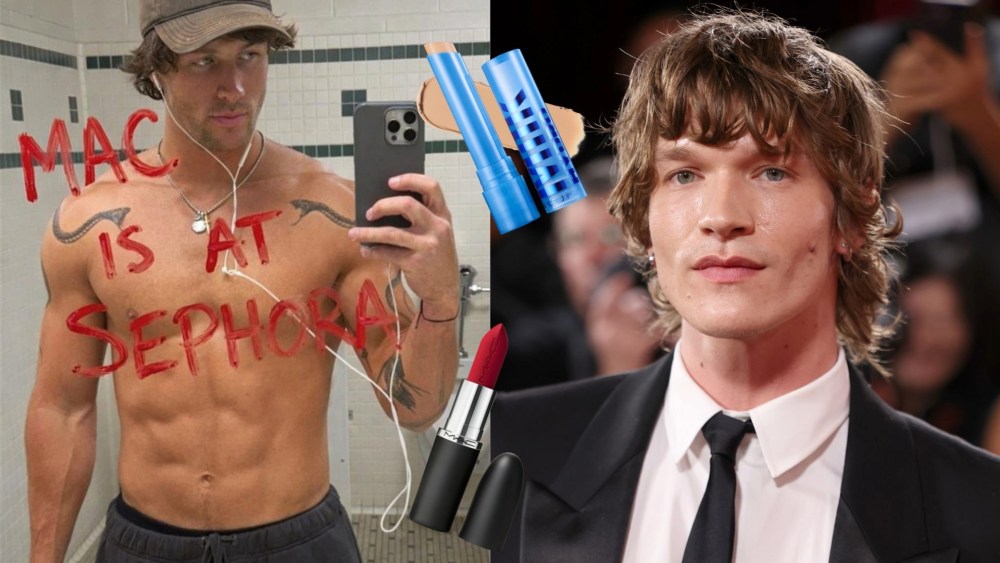
A prime example of this strategy occurred when MAC Cosmetics selected reality television personality Rob Rausch to headline their highly anticipated Sephora launch campaign. Rather than choosing established beauty influencers or A-list female ambassadors, the brand featured the 27-year-old ‘The Traitors’ winner in a provocative shirtless photograph posted to Instagram on March 2nd.
The campaign’s centerpiece showed Rausch posing before a mirror displaying ‘MAC is at Sephora’ written in the brand’s iconic Ruby Woo red lipstick. This strategic choice proved highly effective, generating nearly 8 million impressions across international social media platforms within just three days. The success extended beyond digital channels, with the mirror selfie concept translated into a Times Square billboard featuring Rausch in his characteristic cowboy hat, reimagined in MAC’s signature black with brand logos.
This approach reflects a broader industry movement toward what experts term ‘heartthrob marketing.’ Several other beauty companies have adopted similar strategies, recognizing the power of male celebrity appeal in reaching their predominantly female customer base.
Milk Makeup demonstrated this trend at the Golden Globes in January, featuring ‘Heated Rivalry’ star Connor Storrie to promote their upcoming Hydro Grip Gel Concealer. Similarly, Ulta Beauty incorporated this strategy into their holiday marketing, creating Instagram content showcasing Generation Z male celebrities including Tyriq Withers from Jordan Peele’s ‘Him’ and ‘Love Island’ participant Jeremiah Brown carrying Ulta shopping bags in casual, lifestyle-focused imagery.
The trend extends internationally, with Rhode selecting British actor Harris Dickinson, known for his role in ‘Babygirl,’ as the spokesperson for their $30 Glazing Mist product in June 2025. L’Oréal Paris also embraced this approach by appointing Formula 1 driver Carlos Sainz as the global representative for their Elvive hair care collection.
According to brand strategist Jemma Wu, this marketing evolution makes strategic sense as it leverages what she describes as ‘the female gaze.’ She notes that this approach creates a powerful combination of entertainment value, fan engagement, and social media viral potential, encouraging audiences to discuss, share, and create memes around the content.
The effectiveness of this strategy is particularly evident in campaigns that embrace humor and playfulness. Clean energy drink brand Gorgie, which recently received investment from influencer Alix Earle, exemplified this approach by featuring actor KJ Apa’s musical persona, Mr. Fantasy, in a provocatively themed campaign for their new Mr. Fantasy’s Sexy Fizzle Punch flavor launch in March.
Wu emphasizes that the constant emergence of internet-famous male personalities, combined with the beauty industry’s shift toward more entertaining and easily consumable content, creates an ideal environment for this marketing strategy to thrive and generate high levels of audience engagement.